Most “submit your business to 500 directories” advice is a decade out of date. Google has been explicit that mass directory submissions built purely for links are a spam pattern, and low-authority directories that approve every listing instantly do nothing for your rankings or your referral traffic.
The good news is that a small, well-chosen set of directories can still send real customers your way and reinforce your credibility with both search engines and AI answer tools. This guide covers which directories are worth claiming, how to fill out a listing so it actually converts, and how to tell a directory that helps from one that’s just noise.
Quick Answer
Claim and fully complete your listing on the core platforms first — Google Business Profile, Bing Places, Apple Business, Facebook, and Yelp — then add two or three directories specific to your industry (like Houzz for home services, Avvo for lawyers, or Capterra/G2 for software). Skip generic “link building” directories that accept anyone instantly; they carry little SEO value and rarely send visitors.
Start With the Directories That Actually Move the Needle
Not all directories are created equal, and treating them all the same is the biggest mistake business owners make. Split your list into two tiers. Tier one is the handful of platforms that most people actually search on and that carry the most weight with local search algorithms: Google Business Profile, Bing Places, Apple Business (the platform Apple launched in April 2026, folding in what used to be Apple Business Connect), Facebook, and Yelp. These deserve a complete profile — every field filled in, real photos, correct hours, and a business description that mirrors your website’s language.
Tier two is your industry-specific directories. A plumber gets more value from HomeAdvisor, Houzz, or BuildZoom than from a generic “top 100 business sites” list, because visitors there are already looking to hire someone in that trade. Lawyers should prioritize Avvo, FindLaw, or Martindale-Hubbell; medical practices benefit from Healthgrades, Zocdoc, or Vitals; software and SaaS companies should be on G2, Capterra, or TrustRadius; restaurants belong on TripAdvisor and OpenTable. Pick two or three that your actual customers use — not every directory that exists in your category.
Also worth claiming: the Better Business Bureau, your local Chamber of Commerce, and any trade association tied to your industry. These carry trust signals that generic directories don’t, and BBB accreditation in particular shows up when people search your brand name directly.
How to Get Listed the Right Way
Before submitting anywhere, write down your exact business name, address, and phone number (your “NAP”) in one master document, along with your website URL, hours, categories, and a short and long version of your business description. Use that exact same information on every listing. Inconsistent NAP data — a suite number here, a missing one there, an old phone number on one site — makes both search engines and AI tools less confident your business is legitimate, which can quietly hurt how often you show up in local results and AI-generated recommendations.
When you fill out each listing, choose the most specific category available rather than the broadest one, add real photos (not stock images), and write a description that’s actually useful to a reader deciding whether to contact you — what you do, who you do it for, and what makes you different. Add your service area and, where the directory allows it, a link to a relevant page on your site rather than always linking to your homepage.
Only pay for an enhanced or featured listing if the directory itself sends meaningful traffic in your industry — check its own site traffic or ask other businesses in your space whether they get leads from it. Paying purely to get a link from a low-authority directory is a waste of money and, per Google’s own spam policies, can do more harm than good if it looks like a manipulative link pattern.
After the big platforms and your industry picks, run a consistency check every six months or so using a citation tool (BrightLocal and Semrush both offer this) to catch outdated listings, duplicate profiles, or old addresses that competitors or old employees may have created.

Tips and Common Mistakes
Don’t chase volume. Twenty accurate, relevant listings will outperform a hundred inconsistent ones — both for SEO and for the quality of leads you get. A flood of low-quality directory backlinks is exactly the pattern Google’s spam policies call out.
Watch for duplicate listings. These often appear when a directory auto-generates a profile from public data before you claim it, or when an old address or former business name gets listed separately. Duplicates split your reviews and confuse both customers and search engines — claim and merge or remove them.
Keep listings current. A directory listing with last year’s hours or a disconnected phone number costs you customers directly, not just SEO points. Set a recurring reminder to review your top five to ten listings whenever your hours, address, or services change.
Respond to reviews where the directory allows it. Directories like Google, Yelp, and Facebook reward active, responsive profiles with more visibility, and potential customers read the responses as much as the reviews themselves.
Explore more: more growth strategies for small businesses.
industry directory listings FAQs
How many directories should my business actually be listed on?
Focus on quality over quantity. Cover the major cross-industry platforms (Google Business Profile, Bing Places, Apple Business, Facebook, Yelp) plus two or three directories specific to your industry. A tightly curated list beats dozens of generic, low-traffic listings.
Do directory listings still help SEO in 2026?
Yes, but only the relevant, high-authority ones. Google has repeatedly warned against large-scale directory submissions built purely for links. Listings on directories your actual customers use still help with local visibility, trust signals, and referral traffic.
Should I pay for a directory listing?
Only if the directory itself drives real traffic or leads in your industry — check its own visitor numbers or ask peers whether they get business from it. Paying just to get a backlink from a low-authority directory rarely pays off and can look manipulative to search engines.
What is NAP consistency and why does it matter?
NAP stands for Name, Address, and Phone number. Keeping this information identical across every listing helps search engines and AI tools confirm your business is legitimate and located where you say — inconsistencies can hurt your local rankings and how often AI assistants recommend you.
Turn Customers Into Your Growth Engine
Launch a referral program that turns happy customers into your best growth channel — with ReferralEarl. Try ReferralEarl.
Want this in your inbox? Subscribe to the free newsletter.
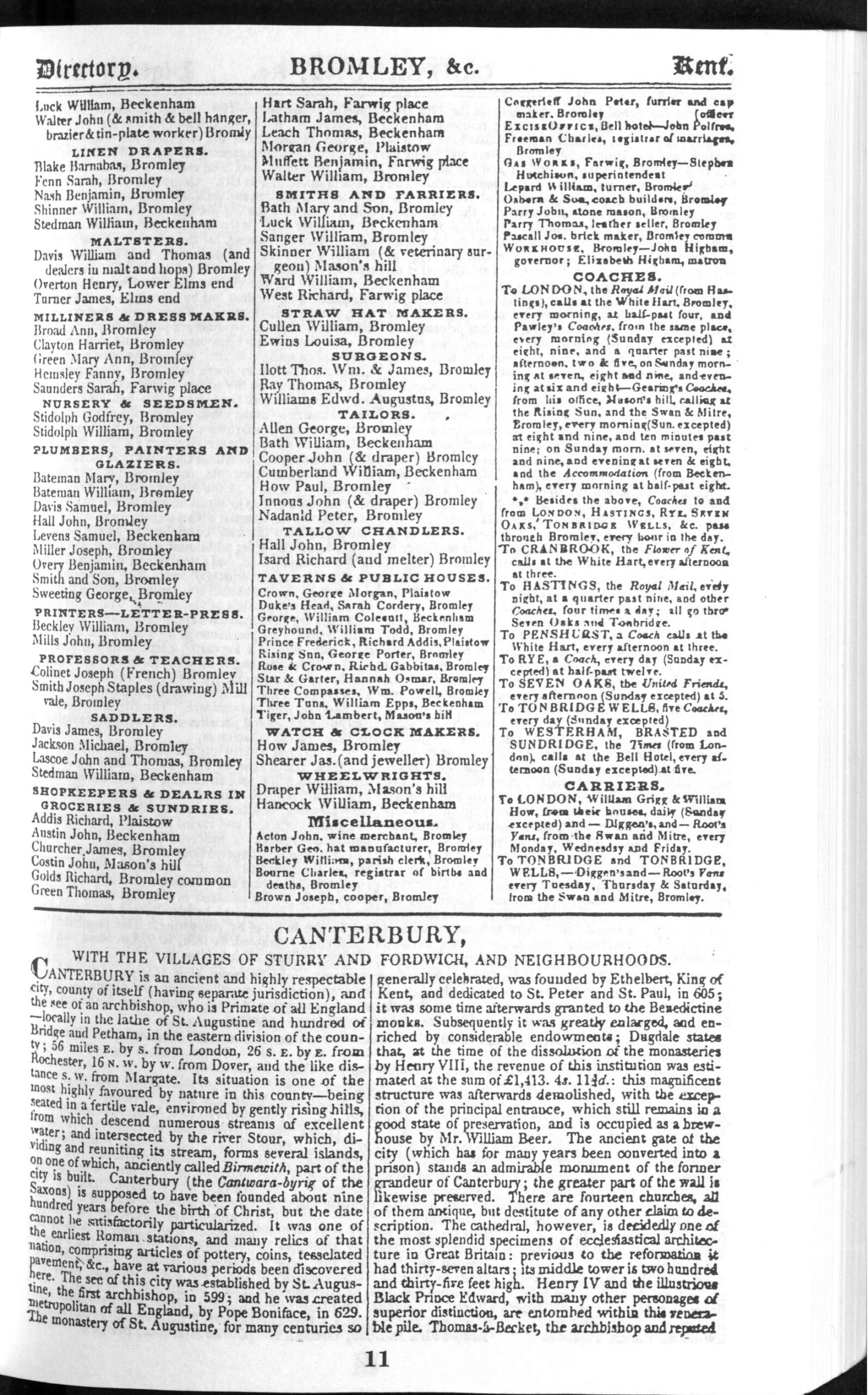
Photo: Original: J. Pigot & Co. Facsimile: King’s Lynn : Michael Winton, 1993. / Public domain, via Wikimedia Commons.